Tuesday, July 2, 2024

The Art of Making a Sale: Mastering the Craft


I used to think making a sale was about confidence, strategy, and knowing your product. That’s adorable. It’s actually about surviving long enough in a conversation without sounding like a robot or a desperate raccoon trying to trade trash for cash.

My first real attempt at selling something, I came in way too strong. I had watched exactly one motivational video and suddenly believed I was a closer. I walked in with the energy of someone about to change lives. Five minutes later, I had verbally tripped over my own pitch, forgot what I was selling, and somehow apologized to the customer for existing.

There’s a moment in every sale where your brain just… leaves. You’re mid-sentence, saying something like, “What makes this product unique is—” and then nothing. Just a loading screen behind your eyes. The customer is staring at you, waiting, and you’re internally screaming, Say anything. Words. Any words.

So you panic. You start overselling. Suddenly this normal, everyday product has become the solution to problems it was never designed to fix. “This will save you time, money, stress… possibly improve your relationships… might even fix your posture.” Now you sound like a late-night infomercial with emotional baggage.

And then there’s reading the customer. Everyone says, “Read the room.” I’m over here misreading the room like it’s written in another language. Someone nods politely and I’m thinking, They’re ready to buy. Turns out they’re just being nice and planning their escape route.

The real art of making a sale is pretending you’re not trying to make a sale while absolutely trying to make a sale. It’s like a social dance where you can’t step on toes, can’t be too eager, but also can’t just stand there like a confused statue. You have to be helpful, but not pushy. Confident, but not intense. Available, but not hovering like a retail ghost.

And rejection? Oh, rejection builds character… and a very specific kind of internal monologue. You’ll hear “I’ll think about it” so many times you start wondering if everyone on earth is just constantly thinking about things instead of doing them. At some point, you want to follow up like, “Hey, just checking—did the thinking go well?”

But every once in a while, it happens. The stars align. The conversation flows. You don’t trip over your words. The customer actually seems interested. And then they say it—the magic phrase: “Yeah, let’s do it.”

In that moment, you try to stay calm. Professional. Inside, you’re celebrating like you just won a game show. I did it. I convinced another human being to exchange money for something. Civilization continues because of me.

And the funny part? The more you do it, the less it’s about the pitch and the more it’s about just being… normal. Talking like a human. Listening instead of waiting for your turn to speak. Not treating every interaction like it’s the final round of a sales championship.

I still mess up. I still overthink. I still have moments where I walk away from a conversation and replay it like, Why did I say that? Who talks like that?

But now I know the truth: making a sale isn’t about being perfect. It’s about being just convincing enough that nobody notices you were improvising the whole time.

And if all else fails… there’s always the classic move:
“Let me know if you have any questions.”

Translation: Please come back. I tried my best.

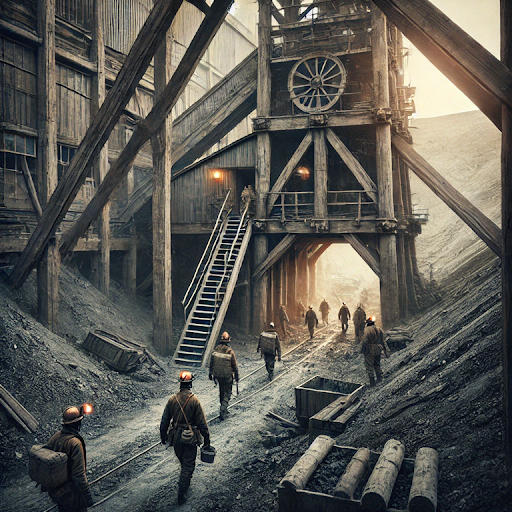
Unveiling the Depths: Fascinating Facts About Coal Mines and Coal Miners


Coal mining is one of those jobs that immediately earns respect. Not polite respect—serious respect. The kind where you don’t even joke too hard because you realize these are people who willingly go underground for a living while the rest of us complain when the Wi-Fi drops for six seconds.

I once talked to a coal miner and within five minutes I felt like I needed to apologize for every soft life decision I’ve ever made. I was like, “Yeah, work’s been stressful,” and he’s looking at me like, Do you mean the kind of stress that involves sunlight and breathable air?

Coal mines are basically the earth saying, “You want this energy? Come get it yourself.” And miners said, “Alright,” grabbed a helmet, and just walked straight into a giant hole like it was a normal career choice.

Meanwhile, I hesitate going into my basement if the light flickers.

The thing about coal mines is they are the opposite of everything comfortable. It’s dark, it’s cramped, it’s loud, and there’s always that underlying feeling of, “This place is older than my problems and significantly less forgiving.” It’s like working inside a very serious, very dusty introvert.

And coal miners? Different breed entirely. These are people who wake up and say, “Time to go several hundred feet underground and argue with rocks.” Not metaphorically. Literally. Their whole job is convincing solid earth to cooperate, which, historically, earth is not great at.

There’s also an unspoken toughness to it. You don’t hear a coal miner say, “It’s been a long day, I need a bubble bath and a podcast.” No, it’s more like, “Yeah, we wrestled geology for eight hours. It blinked first.”

And the gear! Helmets with lights on them like human flashlights. I can’t even find my phone in a well-lit room, and these guys are navigating tunnels that look like the inside of a shadow. If my flashlight flickered once, I’d be writing my will on a rock.

What gets me is how normal it is to them. Just another day. Just another shift underground. Meanwhile, if I drop something behind the couch, I weigh my options like, “Do I really need that back?”

And yet, without coal miners, a lot of the modern world just… doesn’t happen the same way. Lights, heat, entire industries—they’ve all leaned on people who decided that going into the earth instead of staying on it was a reasonable way to make a living.

It’s humbling. And also slightly terrifying.

So next time I think my job is hard, I remember there are people out there clocking in, putting on a helmet, and heading into the ground like it’s just another Tuesday.

And suddenly, my biggest challenge—replying to emails—feels a little less heroic.


The Growing Threat of Cyberattacks: What You Need to Know


I used to think a “cyberattack” was something that only happened to billion-dollar companies with glass buildings and a receptionist named Cheryl who says “synergy” too much. Meanwhile, I was out here using the same password for everything like it was a family heirloom: Password123. Passed down through generations. My future grandkids were gonna inherit it along with my email spam.

Then one day, my email got hacked.

Not dramatically either. No ominous music. No hoodie-wearing genius typing in a dark room. Just me, sipping coffee, opening my inbox, and noticing I had apparently sent 47 emails about “exclusive crypto opportunities” to people I haven’t spoken to since high school. Including a gym teacher who once failed me for “creative stretching.”

That’s when it hits you: cyberattacks aren’t just for corporations—they’re for regular people who once clicked “remind me later” on a security update 700 times in a row.

Hackers don’t care who you are. You could be a CEO or a guy who Googles “how to boil eggs” every Sunday like it’s a new concept. If your digital door is unlocked, they’re walking right in, putting their feet on the coffee table, and ordering suspicious things in your name.

And here’s the thing—protecting yourself isn’t hard. It just requires doing the stuff we all pretend we’ll get to “eventually.”

First: passwords. I know. Nobody wants to create a password that looks like a Wi-Fi router had a seizure. But if your password can be guessed by a toddler smashing a keyboard, you’re basically handing hackers a welcome mat. Stop naming your password after your dog. Hackers love dogs too. Make it weird. Make it long. Make it something even you don’t fully understand.

Second: two-factor authentication. This is the digital equivalent of a bouncer at the club. Even if someone knows your password, they still need that extra code sent to your phone. Yes, it’s mildly annoying. So is having your bank account turned into a charity donation you didn’t approve.

Third: stop clicking sketchy links. If you get an email that says “URGENT: YOU WON A FREE VACATION,” ask yourself one question—when was the last time life gave you anything for free? Exactly. That link isn’t a vacation. It’s a one-way ticket to “why is my computer speaking Russian now?”

Fourth: updates. I used to treat software updates like they were personal insults. “Not now,” I’d whisper, clicking postpone like I was dodging responsibility itself. Turns out, those updates fix security holes. Without them, your device is basically wearing flip-flops in a war zone.

And finally: don’t overshare. The internet doesn’t need to know your first pet’s name, your favorite teacher, and the street you grew up on—all of which, by the way, are commonly used as security questions. You’re not just posting memories; you’re building a “How to Hack Me” starter kit.

The truth is, cyber safety isn’t about becoming some paranoid tech wizard who wraps their laptop in aluminum foil. It’s just about not being the easiest target in the room.

Because hackers, like everyone else, are a little lazy.

They’re not going after the digital fortress with laser beams and guard dogs. They’re going after the guy who still thinks “123456” is a bold, innovative password choice.

Don’t be that guy.

I was that guy.

And somewhere out there, my old hacker is probably still wondering why nobody invested in his crypto emails.

Thursday, June 27, 2024

Understanding the Difference Between a Republic and a Democracy


I used to think a republic and a democracy were the same thing—kind of like thinking a crocodile and an alligator are identical until one of them ruins your afternoon in a slightly different way.

Then someone at a barbecue brought it up, and suddenly we had three guys arguing, one guy Googling, and one guy just there for the potato salad yelling, “It’s both!” like he just solved world peace.

Here’s the deal, explained the way it finally made sense to me:

A democracy is basically everyone voting directly on everything. It’s like a group chat where every single person has to agree on where to eat. Sounds empowering… until you’ve spent 45 minutes deciding between pizza and tacos and somehow end up with nobody happy and someone suggesting sushi just to cause chaos.

A republic, on the other hand, is when you vote for people to go make those decisions for you. It’s like appointing one friend to order for the table because last time the group tried to decide together, someone cried and another person stopped speaking to everyone for a week.

In theory, both systems are trying to answer the same question: “How do we make decisions without flipping a table?”

In a straight-up democracy, the majority rules directly. Which sounds great—unless you’re in the minority. Then it feels a little like being the only person who wanted pizza while everyone else votes for kale wraps and calls it “progress.”

In a republic, you’re choosing representatives to (hopefully) make thoughtful decisions on your behalf. Keyword: hopefully. Because sometimes it feels like you sent someone to order steak and they came back with tofu and a speech about why you should be grateful.

The funny part is, in real life, most systems are kind of a mix. It’s like ordering a combo meal—you get a little democracy, a little republic, and a side of confusion.

And no matter which one you’re talking about, the same universal truth applies:
people will argue about it like it’s a sport.

You’ll hear things like, “We’re a republic, not a democracy!”
Then someone else goes, “Actually—”
And suddenly you’re watching a debate that started with definitions and somehow ends with someone questioning the entire education system.

Meanwhile, the rest of us are just trying to figure out why voting always feels like choosing between two sandwiches you didn’t order but are now emotionally invested in.

At the end of the day, the difference isn’t as mysterious as it sounds:

A democracy is everyone decides.
A republic is you pick people to decide.

And both rely on one critical thing: people actually paying attention… which, let’s be honest, is where things get interesting.

Because whether it’s a republic or a democracy, if nobody’s paying attention, it slowly turns into a system best described as:
“Wait… who picked this?”

Tuesday, June 25, 2024

Exploring Juneau, Alaska: The Role of Cruise Ship Tourism in Boosting the Economy


I went to Juneau, Alaska expecting a nice trip. What I got instead was a full-blown adventure where even the weather felt like it had a personality—and honestly, I think we bonded.

First thing you notice: you don’t just arrive in Juneau. You make an entrance. Boat, plane—either way you show up like you’ve got a backstory. The mountains are right there, massive and dramatic, like they’ve been waiting all day for you to show up so they can say, “Alright, impress us.”

Challenge accepted.

The air is crisp, the kind that makes you feel healthier just by breathing it. I took one deep inhale and immediately felt like I should apologize to my lungs for everything I’ve put them through over the years. Juneau air doesn’t play around—it’s premium oxygen.

And yeah, it rains—but in a friendly way. Not “cancel your plans” rain. More like, “Hey, let’s keep things fresh.” It’s like nature’s version of a light misting system at a fancy grocery store, except you’re the produce. Honestly, it keeps everything looking ridiculously green, like the trees are showing off.

Naturally, I decided to go hiking, because that’s what you do when you suddenly believe you’re an outdoors person.

The trails? Incredible. Every turn looks like a postcard. Waterfalls, forests, views that make you stop and go, “Okay, wow… I get it now.” I started the hike feeling like a nature documentary host. By the middle, I was negotiating with my legs. By the top? Pure victory. I didn’t just hike—I conquered. Was I passed by locals moving twice my speed? Sure. But I choose to believe they were professionally trained mountain ninjas.

Wildlife in Juneau is just casually living its best life around you. You’ll hear about bears like they’re minor celebrities in town. “Oh yeah, one wandered by earlier.” I didn’t see one up close, but I did walk around with the confidence of someone who might see one, which is basically the same thing. Every snapping twig turned me into a very alert, very respectful guest in their home.

Then there are the glaciers.

Pictures don’t do it justice. Videos don’t do it justice. Standing there in front of one feels like you accidentally walked into a screensaver—but in real life. It’s quiet, it’s massive, and it makes you feel like you should whisper even if you’re alone. I just stood there grinning like an idiot, thinking, “This exists? Just out here?”

Downtown Juneau has this awesome, cozy vibe. Bright buildings, friendly people, little shops that somehow convince you that yes, you do need that souvenir. And the food? Unreal. Fresh salmon that tastes like it was swimming five minutes ago and decided, “You know what, I’m ready for greatness.”

By the end of the trip, I felt like a slightly upgraded version of myself. More outdoorsy. More appreciative. Slightly better at walking uphill without questioning all my life choices.

Juneau has this way of making everything feel exciting—the air, the trails, the possibility that something incredible is just around the corner. It’s the kind of place where even doing nothing feels like you’re doing something amazing.

Would I go back?

In a heartbeat.

Next time, I’m bringing even more enthusiasm… and maybe just enough confidence to keep up with Linda, the mountain ninja.

Wednesday, June 19, 2024

Discovering Mendenhall Glacier: A Journey into Alaska’s Frozen Wonderland


Rafting near the Mendenhall Glacier is the kind of experience that makes you feel like you accidentally signed up to be the main character in an adventure movie… except your role is “guy trying not to scream too loudly in front of strangers.”

It starts calmly. Too calmly.

You’re standing there, geared up in what can only be described as a fashionable marshmallow suit, holding a paddle like you’ve known what you’re doing your whole life. The guide gives instructions—important, probably life-saving instructions—and everyone nods like, “Yes, of course, paddling makes sense.” Meanwhile, I’m still figuring out which end of the paddle is the business end.

Then you see it—the glacier.

It’s massive. It’s glowing blue like it’s powered by secrets. It looks like something that’s been sitting there for thousands of years just waiting for you to float by so it can go, “Watch this.” And suddenly, you feel honored. And tiny. And slightly like a snack.

You get into the raft, and for a brief moment, everything is peaceful. The water is smooth, the air is crisp, and you think, “Wow, this is serene.”

Then the river politely says, “Alright, let’s add some spice.”

The raft hits the first bit of movement, and everyone instantly becomes a team. A very enthusiastic, slightly uncoordinated team. The guide is shouting commands like a drill sergeant with a sense of humor—“Paddle forward!”—and we’re all paddling like we’re auditioning for a survival show.

Water splashes up. It’s cold. Not “refreshing dip” cold. This is “I just discovered new layers of my soul” cold. You laugh, because what else are you going to do? Crying would freeze mid-air.

And the best part? You’re surrounded by ridiculous beauty the entire time.

Snow-dusted peaks. Forests so green they look fake. Ice floating by like nature’s version of luxury yachts. At one point, I was paddling, laughing, slightly soaked, and thinking, “This is either the best idea I’ve ever had or the most scenic mistake of my life.”

Either way, worth it.

There’s a moment during the raft where everything just clicks. The paddling gets smoother, the team starts to sync up, and you realize—you’re actually doing it. You’re navigating icy water next to a glacier like some kind of rugged explorer… who may or may not have yelled “WHOA” a little too loudly five minutes ago.

By the end, you’re soaked, energized, and grinning like you just got away with something.

Because you kind of did.

You floated next to an ancient glacier. You laughed in the face of freezing water. You paddled like a champion (or at least like someone trying very hard). And somehow, you came out of it feeling like you leveled up as a human being.

Would I do it again?

Absolutely.

Next time, I’m bringing two things: better paddle confidence… and a victory speech for when I inevitably declare myself “King of the Glacier” halfway through.

Saturday, June 15, 2024

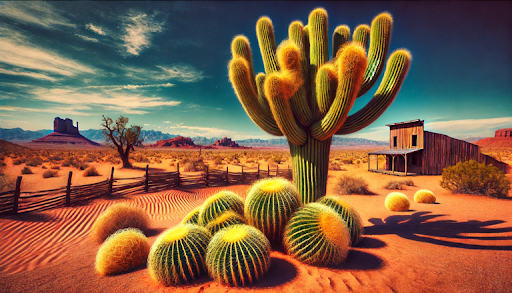
The Wild Wild West: Hardships and Luxuries


The Wild West was basically a group chat with no moderator, no rules, and everyone had a mustache that looked like it made its own decisions.

Back then, if someone cut you off in traffic, there was no traffic—just a guy named Earl on a horse judging you silently while chewing something that might’ve been tobacco or drywall. Today, you get honked at and flip someone off. Back then, you got stared at, and suddenly there was a piano playing somewhere and you were legally required to duel at noon.

Saloon doors didn’t just open—they announced problems. You couldn’t casually walk into a bar. You had to burst in like you were either here to drink whiskey or ruin someone’s entire bloodline. Meanwhile today, we push open a glass door while checking our phones and apologizing to a plant.

Ordering a drink in the Wild West was simple:
“Whiskey.”
That’s it. No flavors, no options, no “Can I get that with oat milk?” You got a brown liquid that tasted like regret and poor decisions, and you liked it because the alternative was dehydration and becoming part of the scenery.

Law enforcement was one guy. Just one. A sheriff with a badge, a hat, and the emotional exhaustion of someone who knows Gary is about to start something again. Today we have entire departments, paperwork, policies. Back then the policy was, “Gary, don’t.” And Gary absolutely did.

Healthcare? You got a guy with a bag. Not even a good bag. Just a bag that looked like it had seen things. If you got shot, the treatment plan was basically, “Let’s see what happens.” Now we have hospitals, insurance, and bills that make you wish you’d just gone back to the bag guy.

Fashion was aggressive. Everyone dressed like they were about to either rob a train or write a country album. Boots, hats, spurs—spurs! Imagine going to the grocery store today and hearing someone jingle behind you like a festive threat.

Communication was slow and dramatic. You wanted to send a message? You wrote it down, handed it to a guy, and hoped he didn’t get distracted by a cactus or existential dread. Today, we send texts and still get mad if someone takes five minutes to respond. In the Wild West, five minutes meant your messenger hadn’t even emotionally prepared to leave yet.

And let’s talk about conflict resolution. Today, you argue online with strangers named things like “TruckGuy92.” Back then, you argued with eye contact, sunlight, and a countdown to potential death. There was no “typing…” bubble. Just tension and a lot of squinting.

Honestly, the Wild West wasn’t tougher people—it was just fewer options. You couldn’t order food, call for help, or Google “how to survive a snake bite.” You just looked at the snake and both of you made choices.

Now we’ve got comfort, convenience, and chairs that don’t try to collapse under us for character development. But a small part of me wonders… if someone burst through a set of saloon doors today, would we instinctively duck… or just assume it’s a themed restaurant and ask for the drink menu?

Probably both.

  Mother’s Day always sneaks up on me like a ninja with a greeting card. One minute I’m living life, the next I’m standing in a store aisle ...