Wednesday, July 24, 2024

The Sweet Delight and Bitter Truth of Candy for Kids


Candy was clearly invented by a child who somehow got access to a lab and zero adult supervision.

Think about it. No reasonable adult wakes up and says, “You know what the world needs? Edible neon ropes that taste like happiness and chaos.” That’s a kid idea. Probably pitched mid-sugar rush: “What if… snacks… but louder?”

Candy doesn’t just exist—it performs.

You open a bag and suddenly you’re holding a rainbow that legally shouldn’t be that shiny. Gummies bounce. Chocolate melts like it’s emotionally overwhelmed. Hard candy sits there like, “Go ahead. Break a tooth. I dare you.”

And kids? Kids don’t eat candy. They experience it.

A child with a lollipop isn’t just having a treat—they’re conducting a full scientific study:

  • How long can this last?

  • What happens if I lick it sideways?

  • What if I stick it to the table for five minutes?

Meanwhile, parents are watching like wildlife observers. “Notice how the child becomes 87% louder after three bites…”

Chocolate is the smooth talker of the candy world. It shows up calm, collected, acting like it has a 401(k). Then five minutes later it’s melted into your hand like, “I never said I had stability.”

Gummies are chaos in small, friendly shapes. Bears, worms, fruit slices—none of these things should be chewy, yet here we are. You bite one and it fights back just enough to feel personal.

Sour candy? That’s just betrayal coated in sugar. Kids pop one in like heroes, then immediately make a face that looks like they just bit into a lemon that owes them money.

And don’t even get started on candy corn. That’s not candy—that’s a seasonal debate.

The real magic of candy isn’t just the taste. It’s the transformation.

A quiet kid becomes a stand-up comedian.
A tired kid becomes a track star.
A calm kid becomes… suspiciously quiet, which is somehow worse.

And then comes the aftermath.

Wrappers everywhere. Sticky fingerprints on surfaces that were once clean. A mysterious half-eaten gummy found three days later in a place no gummy should ever be.

Yet somehow, candy survives every generation.

Because it’s not just sugar—it’s a tiny, colorful moment of joy. A reward. A celebration. A “yes, you can have one more” that turns into “okay, maybe two more, but that’s it… okay three, but we’re done.”

Candy doesn’t pretend to be healthy. It doesn’t offer life advice. It just shows up, tastes amazing, and leaves everyone slightly more chaotic than before.

Honestly, that’s a pretty solid legacy.

The Life of Being a Bad Boy: The Untold Chronicles


Being a “bad boy” sounds cool until you realize it mostly involves standing in a corner pretending you meant to be there.

Nobody wakes up and says, “Today, I will mildly inconvenience society.” It just sort of happens. One minute you’re minding your business, the next you’re jaywalking like you’re in an action movie—except the only thing chasing you is a confused pigeon.

The bad boy lifestyle isn’t about chaos. It’s about small, unnecessary rebellion.

You don’t wait for the microwave to hit zero.
You take one pen from the bank and never return it.
You say “you too” when the waiter tells you to enjoy your meal and then commit to it like it was intentional.

That’s the energy.

There’s a myth that bad boys are fearless. Not true. They just pick very specific battles.

Will they ignore a “No Parking” sign for 30 seconds? Absolutely.
Will they open a PDF that says “Final_Final_Use_This_One”? Never. That’s where consequences live.

Fashion-wise, the bad boy look is just “I might fix a motorcycle later, or I might just stand near one.” It’s confidence mixed with the possibility of Googling “how to fix a motorcycle” at 2 a.m.

And let’s talk attitude.

A true bad boy doesn’t cause a scene. He slightly disrupts the vibe.

Someone says, “Let’s clap on three.”
He claps on two and a half.

Someone says, “We’re all bringing snacks.”
He shows up with one bag of chips and a story.

There’s also a surprising amount of overthinking.

You lean against a wall, trying to look mysterious, but now you’re wondering:

  • Is this wall clean?

  • Do I look casual or like I forgot how to stand?

  • Am I… becoming part of the wall?

That’s the internal struggle nobody talks about.

Bad boys also have a complicated relationship with rules. Not breaking them—just… negotiating.

Speed limit says 55? “What if we explored 58?”
“Push” door? “Let’s test the pull theory just in case.”

It’s less rebellion, more curiosity with attitude.

And the reputation? Completely exaggerated.

People imagine dramatic entrances, sunglasses indoors, walking away from explosions. In reality, you’re just trying to open a stubborn jar lid while maintaining dignity.

The real secret of being a bad boy is commitment.

Not to danger. Not to chaos.

To the bit.

You commit to the idea that you’re just a little unpredictable. A little off-script. The kind of person who might eat dessert before dinner and not explain yourself.

And honestly? That’s enough.

Because life doesn’t need a full villain arc. Sometimes it just needs someone willing to press the elevator button twice and stand by that decision.

No regrets.

Wednesday, July 10, 2024

The Classic Impact of Material Obsession on Society


I realized I had a problem the day I bought a second wallet… to hold the emotional weight of the first wallet’s bad decisions.

It didn’t feel like a problem at first. It felt like progress. I told myself I was “leveling up.” You know, becoming the kind of person who owns things that come in matte black and require a YouTube review before purchasing. Somewhere along the line, I stopped buying stuff and started auditioning for a lifestyle I absolutely did not have.

I remember standing in my kitchen, staring at a $300 blender like it was going to change my future. “This is it,” I thought. “This is the blender that turns me into a smoothie guy.” I have made exactly one smoothie. It tasted like regret and frozen spinach. The blender now lives on my counter as a monument to who I thought I could be.

My closet? That’s not a closet anymore. That’s a museum of alternate versions of me. There’s “gym me” (hasn’t shown up in months), “outdoorsy me” (owns boots that have never seen dirt), and “dress-up me” (waiting for an event that requires more than jeans and mild effort). Every hanger is basically a personality I purchased and then abandoned.

And don’t even get me started on online shopping. Late at night, it turns into a full-blown emotional support system. I’ll be sitting there like, “You know what would fix everything? A new pair of shoes.” Not therapy. Not sleep. Shoes. Because nothing says stability like tracking a package every two hours.

The best part is the justification. I become a lawyer in my own head. “This isn’t a want—it’s an investment.” In what? My ability to look slightly more put together while still forgetting why I walked into a room? Incredible return.

Then the packages arrive, and for a brief moment, I feel like I’ve won. I open the box like it’s a life achievement. But give it a week—two max—and that same item is just… there. Existing. Blending in with all the other “life-changing” purchases that quietly became background characters.

At some point, I looked around and realized my stuff had more structure than my life. My drawers were organized. My shelves were neat. Meanwhile, I’m eating cereal at 11 PM wondering how I ended up owning three jackets that all do the exact same thing.

And the weirdest part? The more I bought, the less anything meant. It’s like I diluted my own excitement. Nothing felt special because everything was trying to be.

Now I catch myself sometimes. Not always—I’m not about to pretend I’ve transcended the urge. But every now and then, I’ll hover over that “buy now” button and think, “Am I buying this… or am I trying to become someone again?”

Sometimes I still click it. I’m only human.

But at least now I know the truth: no package has ever arrived carrying a better version of me inside.

Just more stuff… and occasionally, a really nice box.

Tuesday, July 9, 2024

The Importance of a Home Inspection: Good Reasons to Invest in One


I used to think a home inspection was just a formality—like saying “I read the terms and conditions” before clicking accept. You don’t actually read it, you just trust that nothing in there will ruin your life.

Then I almost bought a house that looked perfect. I mean perfect. Fresh paint, nice floors, smelled like someone baked cookies exclusively for financial deception. I was already mentally placing my couch, naming the rooms, planning where I’d stand dramatically holding coffee like I had my life together.

Enter the home inspector—the only person who walks into your dream and immediately starts roasting it.

Within five minutes, he’s poking at walls, squinting at ceilings, making little “hmm” noises that feel legally concerning. Meanwhile, I’m following him around like a nervous intern. “Is that… bad?” I’d ask. He wouldn’t even look at me. Just scribble something down like, This house has secrets.

At one point, he tapped a wall and said, “That’s interesting.”
Nothing good has ever followed the phrase “that’s interesting” in a home inspection. That’s not curiosity—that’s a warning disguised as politeness.

Turns out, the “perfect” house had the structural integrity of a motivational speech. The foundation was questionable, the wiring looked like it had been done by someone who learned electricity from vibes, and the plumbing? Let’s just say water had a very free-spirited approach to where it wanted to go.

And I’m standing there thinking, “Wow. I almost bought a personality trait with a roof.”

The wild part is how confident you feel before the inspection. You walk in like, “Yes, this is the one.” You start emotionally committing. You’re already picturing holidays, barbecues, telling people, “Yeah, we love the natural light.” Meanwhile, the house is quietly falling apart behind the drywall like it’s holding in a sneeze.

A home inspection is basically reality showing up uninvited. It’s the difference between, “This is my dream home” and “This is a financial horror story with windows.”

The inspector doesn’t care about your dreams. He’s not there for your vision board. He’s there to expose the fact that your future living room might also double as a mild safety hazard. And honestly, you need that person. You need someone who isn’t emotionally attached, who isn’t impressed by granite countertops, who sees a crack in the foundation and doesn’t say, “It adds character.”

Because here’s the truth: houses are excellent liars. They put on a good show. They dress up nice. They distract you with shiny appliances while quietly ignoring the fact that the roof might retire before you do.

After that experience, I will never skip a home inspection. Ever. I don’t care if the house was built yesterday by angels using premium materials blessed by the universe. I want someone in there tapping walls, crawling through spaces, judging everything like it owes them money.

Because nothing humbles you faster than realizing your dream home was one inspection away from becoming your biggest regret.

Now, when I walk into a house, I don’t think, “This could be my home.”
I think, “What are you hiding?”

And honestly… I respect the inspector more than the house.

Tuesday, July 2, 2024

The Art of Making a Sale: Mastering the Craft


I used to think making a sale was about confidence, strategy, and knowing your product. That’s adorable. It’s actually about surviving long enough in a conversation without sounding like a robot or a desperate raccoon trying to trade trash for cash.

My first real attempt at selling something, I came in way too strong. I had watched exactly one motivational video and suddenly believed I was a closer. I walked in with the energy of someone about to change lives. Five minutes later, I had verbally tripped over my own pitch, forgot what I was selling, and somehow apologized to the customer for existing.

There’s a moment in every sale where your brain just… leaves. You’re mid-sentence, saying something like, “What makes this product unique is—” and then nothing. Just a loading screen behind your eyes. The customer is staring at you, waiting, and you’re internally screaming, Say anything. Words. Any words.

So you panic. You start overselling. Suddenly this normal, everyday product has become the solution to problems it was never designed to fix. “This will save you time, money, stress… possibly improve your relationships… might even fix your posture.” Now you sound like a late-night infomercial with emotional baggage.

And then there’s reading the customer. Everyone says, “Read the room.” I’m over here misreading the room like it’s written in another language. Someone nods politely and I’m thinking, They’re ready to buy. Turns out they’re just being nice and planning their escape route.

The real art of making a sale is pretending you’re not trying to make a sale while absolutely trying to make a sale. It’s like a social dance where you can’t step on toes, can’t be too eager, but also can’t just stand there like a confused statue. You have to be helpful, but not pushy. Confident, but not intense. Available, but not hovering like a retail ghost.

And rejection? Oh, rejection builds character… and a very specific kind of internal monologue. You’ll hear “I’ll think about it” so many times you start wondering if everyone on earth is just constantly thinking about things instead of doing them. At some point, you want to follow up like, “Hey, just checking—did the thinking go well?”

But every once in a while, it happens. The stars align. The conversation flows. You don’t trip over your words. The customer actually seems interested. And then they say it—the magic phrase: “Yeah, let’s do it.”

In that moment, you try to stay calm. Professional. Inside, you’re celebrating like you just won a game show. I did it. I convinced another human being to exchange money for something. Civilization continues because of me.

And the funny part? The more you do it, the less it’s about the pitch and the more it’s about just being… normal. Talking like a human. Listening instead of waiting for your turn to speak. Not treating every interaction like it’s the final round of a sales championship.

I still mess up. I still overthink. I still have moments where I walk away from a conversation and replay it like, Why did I say that? Who talks like that?

But now I know the truth: making a sale isn’t about being perfect. It’s about being just convincing enough that nobody notices you were improvising the whole time.

And if all else fails… there’s always the classic move:
“Let me know if you have any questions.”

Translation: Please come back. I tried my best.

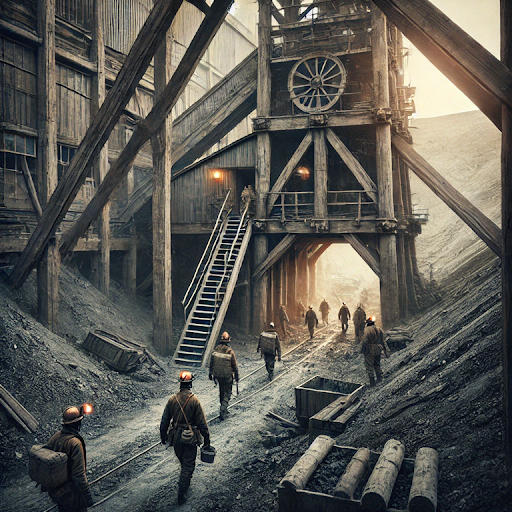
Unveiling the Depths: Fascinating Facts About Coal Mines and Coal Miners


Coal mining is one of those jobs that immediately earns respect. Not polite respect—serious respect. The kind where you don’t even joke too hard because you realize these are people who willingly go underground for a living while the rest of us complain when the Wi-Fi drops for six seconds.

I once talked to a coal miner and within five minutes I felt like I needed to apologize for every soft life decision I’ve ever made. I was like, “Yeah, work’s been stressful,” and he’s looking at me like, Do you mean the kind of stress that involves sunlight and breathable air?

Coal mines are basically the earth saying, “You want this energy? Come get it yourself.” And miners said, “Alright,” grabbed a helmet, and just walked straight into a giant hole like it was a normal career choice.

Meanwhile, I hesitate going into my basement if the light flickers.

The thing about coal mines is they are the opposite of everything comfortable. It’s dark, it’s cramped, it’s loud, and there’s always that underlying feeling of, “This place is older than my problems and significantly less forgiving.” It’s like working inside a very serious, very dusty introvert.

And coal miners? Different breed entirely. These are people who wake up and say, “Time to go several hundred feet underground and argue with rocks.” Not metaphorically. Literally. Their whole job is convincing solid earth to cooperate, which, historically, earth is not great at.

There’s also an unspoken toughness to it. You don’t hear a coal miner say, “It’s been a long day, I need a bubble bath and a podcast.” No, it’s more like, “Yeah, we wrestled geology for eight hours. It blinked first.”

And the gear! Helmets with lights on them like human flashlights. I can’t even find my phone in a well-lit room, and these guys are navigating tunnels that look like the inside of a shadow. If my flashlight flickered once, I’d be writing my will on a rock.

What gets me is how normal it is to them. Just another day. Just another shift underground. Meanwhile, if I drop something behind the couch, I weigh my options like, “Do I really need that back?”

And yet, without coal miners, a lot of the modern world just… doesn’t happen the same way. Lights, heat, entire industries—they’ve all leaned on people who decided that going into the earth instead of staying on it was a reasonable way to make a living.

It’s humbling. And also slightly terrifying.

So next time I think my job is hard, I remember there are people out there clocking in, putting on a helmet, and heading into the ground like it’s just another Tuesday.

And suddenly, my biggest challenge—replying to emails—feels a little less heroic.


The Growing Threat of Cyberattacks: What You Need to Know


I used to think a “cyberattack” was something that only happened to billion-dollar companies with glass buildings and a receptionist named Cheryl who says “synergy” too much. Meanwhile, I was out here using the same password for everything like it was a family heirloom: Password123. Passed down through generations. My future grandkids were gonna inherit it along with my email spam.

Then one day, my email got hacked.

Not dramatically either. No ominous music. No hoodie-wearing genius typing in a dark room. Just me, sipping coffee, opening my inbox, and noticing I had apparently sent 47 emails about “exclusive crypto opportunities” to people I haven’t spoken to since high school. Including a gym teacher who once failed me for “creative stretching.”

That’s when it hits you: cyberattacks aren’t just for corporations—they’re for regular people who once clicked “remind me later” on a security update 700 times in a row.

Hackers don’t care who you are. You could be a CEO or a guy who Googles “how to boil eggs” every Sunday like it’s a new concept. If your digital door is unlocked, they’re walking right in, putting their feet on the coffee table, and ordering suspicious things in your name.

And here’s the thing—protecting yourself isn’t hard. It just requires doing the stuff we all pretend we’ll get to “eventually.”

First: passwords. I know. Nobody wants to create a password that looks like a Wi-Fi router had a seizure. But if your password can be guessed by a toddler smashing a keyboard, you’re basically handing hackers a welcome mat. Stop naming your password after your dog. Hackers love dogs too. Make it weird. Make it long. Make it something even you don’t fully understand.

Second: two-factor authentication. This is the digital equivalent of a bouncer at the club. Even if someone knows your password, they still need that extra code sent to your phone. Yes, it’s mildly annoying. So is having your bank account turned into a charity donation you didn’t approve.

Third: stop clicking sketchy links. If you get an email that says “URGENT: YOU WON A FREE VACATION,” ask yourself one question—when was the last time life gave you anything for free? Exactly. That link isn’t a vacation. It’s a one-way ticket to “why is my computer speaking Russian now?”

Fourth: updates. I used to treat software updates like they were personal insults. “Not now,” I’d whisper, clicking postpone like I was dodging responsibility itself. Turns out, those updates fix security holes. Without them, your device is basically wearing flip-flops in a war zone.

And finally: don’t overshare. The internet doesn’t need to know your first pet’s name, your favorite teacher, and the street you grew up on—all of which, by the way, are commonly used as security questions. You’re not just posting memories; you’re building a “How to Hack Me” starter kit.

The truth is, cyber safety isn’t about becoming some paranoid tech wizard who wraps their laptop in aluminum foil. It’s just about not being the easiest target in the room.

Because hackers, like everyone else, are a little lazy.

They’re not going after the digital fortress with laser beams and guard dogs. They’re going after the guy who still thinks “123456” is a bold, innovative password choice.

Don’t be that guy.

I was that guy.

And somewhere out there, my old hacker is probably still wondering why nobody invested in his crypto emails.

The Reality of Gas Exploration

  Gas exploration is often portrayed as a simple process of drilling and striking energy, but the reality is far more technical, expensive, ...