Friday, June 7, 2024

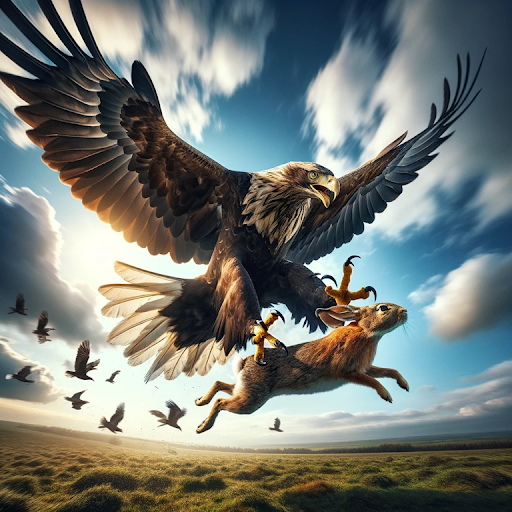
The Majestic Eagle of Freedom and National Bird of the United States


I didn’t really think much about patriotism growing up. It was just… there. Flags on porches, the occasional parade, someone grilling way too much meat on the Fourth. But the first time I saw a Bald Eagle in real life—not on TV, not on a coin, but actually sitting there like it owned the sky—it hit different.

I remember pulling over like I had just spotted a celebrity. Not even a “kinda famous” one. I’m talking top-tier, no-autograph-needed energy. The eagle was just perched there, completely unbothered, like it had already seen everything I was stressing about and decided none of it mattered. Meanwhile, I’m in my car gripping the wheel like, “Do I salute? Is that a thing? Should I apologize for something?”

And in that moment, I realized something—I don’t feel patriotic in big, dramatic speeches. I feel it in weird, quiet moments like that. Just me, a roadside, and a bird that looks like it could bench press my entire life.

There’s something personal about it. The way it doesn’t rush. The way it just exists with this calm confidence, like it knows exactly what it is. I don’t have that. Half the time I walk into a room and forget why I’m there. This bird wakes up, flies wherever it wants, probably judges a few fish, and calls it a successful day. I respect that deeply.

And yeah, I’ve heard the real sound they make. Not exactly the thunderous “freedom scream” the movies sold me. It’s a little more… “surprised squeaky toy.” I’ll admit, that threw me off at first. But honestly, it made me like them more. It’s like finding out the toughest guy in the room has a weird laugh. Doesn’t take away from who they are—it just makes them real.

That’s kind of what stuck with me. The eagle isn’t trying to prove anything. It doesn’t need to. It’s not waving a flag or making a scene. It just shows up, does its thing, and somehow represents something bigger without even trying.

I guess that’s where it gets personal for me. Patriotism isn’t always loud. Sometimes it’s just noticing something solid, something steady, something that reminds you where you are—and feeling a little grounded because of it.

For me, it just happened to be a bird… sitting on a branch… making me question my entire level of confidence.

Thursday, June 6, 2024

The Exhilarating Experience of Going to a Tractor Pull


I didn’t grow up dreaming about fast cars or fancy vacations—I grew up dreaming about engines that sound like they eat gravel for breakfast. That’s how you know tractor pulls got their hooks in me early.

There’s just something about standing there, boots sinking slightly into the dirt, when that first diesel fires up. It doesn’t “start” so much as it announces itself to the county. The ground vibrates like it’s reconsidering its life choices, and suddenly your chest is part speaker system, part percussion instrument. You don’t hear the engine—you feel it rearranging your internal organs.

And then comes the smoke.

Not a polite little puff. No, this is a full-on diesel dragon exhale. Thick, black clouds rolling out like the tractor just remembered it left the stove on back in 1973. It billows up into the sky, and for a moment you think, “Yep, that’s probably visible from space.” Somewhere, a satellite is taking notes.

The driver eases into it, and you can see the tension building like a coiled spring made of horsepower and questionable life decisions. Then boom—throttle down. The engine roars like it’s mad at the concept of physics. Dirt starts flying. Mud launches into the air like it just got drafted into the Olympics. I swear I saw a clump of clay achieve orbit once.

And the smell? Oh man. That mix of diesel, dirt, and just a hint of “something might break at any second”—that’s better than any overpriced candle. Someone bottle that and call it “Eau de Tractor Pull.” I’d wear it.

What really gets me is the crowd. You’ve got folks cheering like it’s the Super Bowl, except instead of touchdowns, we’re celebrating a machine dragging a weighted sled like it owes it money. Every inch forward is a victory. Every sputter gets a collective “oooooh” like we’re watching a high-stakes opera, but with more mud and fewer tuxedos.

And when a tractor finally taps out? Silence for half a second—then applause. Because we all know that machine just gave everything it had. Probably more than it had. Somewhere in there, a bolt is reconsidering its career.

I’ve been to a lot of events, but nothing hits quite like a tractor pull. It’s loud, it’s messy, it’s unapologetically over-the-top—and honestly, it feels real. No filters, no polish, just raw power, flying dirt, and engines screaming their hearts out.

And every time I leave, ears ringing and probably a little dirtier than I arrived, I’m already thinking about the next one. Because once you’ve felt that diesel thunder in your bones, regular quiet just feels… suspicious.


Celebrating Fathers: The Unsung Heroes of Our Lives


There’s a very specific sound that means Dad has entered “project mode.” It’s not a word—it’s a deep inhale, followed by, “Alright, this’ll only take five minutes.”

That’s how Father’s Day usually starts at my house.

I wake up thinking I’m about to give Dad a relaxing day. Maybe some coffee, a card, a “take it easy, you deserve it” speech. Instead, by 9:17 a.m., he’s in the garage, holding a wrench like it’s Excalibur, staring down a lawnmower that “just needs a quick adjustment.”

Now we’re all involved.

Mom’s holding a flashlight in broad daylight. I’m Googling something Dad refuses to believe is correct. The dog is emotionally invested for no reason. And Dad? Dad is narrating the entire thing like it’s a live sports event.

“See, what happened here is… they don’t make these like they used to.”

Nobody knows who “they” are. But we all nod like it’s a personal betrayal.

By noon, the “five-minute fix” has turned into a full backyard operation. Tools everywhere. A mysterious extra bolt no one can explain. Dad wipes his hands, steps back, and says, “That oughta do it.”

It does not, in fact, do it.

But here’s the thing—this is Dad’s happy place. Not sitting still. Not being pampered. He’s happiest when he’s moving, fixing, grilling, teaching, or dramatically over-explaining something simple.

Which brings us to the grill.

Father’s Day grilling isn’t cooking—it’s a performance.

Dad doesn’t just make burgers. He commands them. There’s pacing involved. Tongs clicking like a metronome. At least one unnecessary flare-up that he handles like a firefighter. And heaven help the person who tries to flip something without permission.

“Don’t touch that. It’s got a system.”

The system is chaos. But it’s his chaos.

He hands you a burger like he just won a championship. You take a bite and, honestly, it’s the best burger you’ve ever had. Not because of seasoning—because it comes with a side of Dad energy. Slightly overcooked, heavily debated, but made with full commitment.

And somewhere between the grill smoke and the half-finished projects, you realize something: Dad doesn’t slow down because this is how he shows love.

Not in long speeches. Not in quiet moments.

In fixing things that weren’t broken.
In teaching you things you didn’t ask to learn.
In standing there, arms crossed, saying, “I got it,” even when he clearly doesn’t.

And somehow… he always does.

So this Father’s Day, I didn’t try to stop him. I handed him the wrench. I stayed for the “five-minute” project. I let him explain things I already knew. And yeah, I even respected the grill system.

Because one day, I’m probably going to be the one saying, “Alright, this’ll only take five minutes.”

And I just hope I say it with the same confidence… and the same completely misplaced optimism.

Happy Father’s Day—to the kings of unfinished projects, grill masters of controlled chaos, and the only people who can fix something by staring at it long enough.


The Danger of Facial Recognition Technology


I used to think I had a consistent face. Same nose, same eyes, same general “I slept weird” expression every morning. Then I met my phone’s facial recognition, and now I’m not so sure.

One minute, I’m a verified human being with full access to my digital kingdom. The next minute, my phone looks at me like I just tried to break into Fort Knox wearing someone else’s forehead.

It’s always the worst timing too. I’ll pick up my phone, glance at it like we’re old friends, and—denied. No explanation. No apology. Just a cold, silent “try again.” Suddenly I’m tilting my head like a confused golden retriever, raising my eyebrows, lowering my chin, squinting like I’m solving a math problem with my face.

Nothing.

But let me put on sunglasses, a hat, and stand in terrible lighting? Oh, now it recognizes me instantly. Apparently my phone prefers “mysterious witness in a crime documentary” over my actual face.

And don’t even get me started on morning face. The phone scans me like, “Sir… whoever you are… the man I know does not look like he fought a pillow and lost.” Meanwhile I’m standing there thinking, this is me at my most authentic. Puffy eyes, hair doing interpretive dance, and a face that says “coffee first, identity later.”

Facial recognition has officially become the most judgmental thing in my life. It doesn’t care how I feel. It cares how I present. You gain five pounds? Suspicious. Grow a beard? Unauthorized. Shave the beard? Now you’re a stranger with trust issues.

And heaven forbid you try to unlock your phone after a workout. Sweat dripping, face red, looking like a tomato that made bad life choices—and your phone just refuses. It’s like, “I don’t associate with this level of chaos.”

But here’s where it gets weirdly impressive—and slightly unsettling. This thing maps your face. Not just “hey, that’s a guy.” No, it’s measuring depth, contours, angles—basically building a 3D blueprint of your existence. Somewhere in there is a digital version of me that looks way more organized than I am.

And it learns. That’s the part that gets me. It adapts to your changes over time, which sounds helpful until you realize your phone is quietly watching you age in real time. Every wrinkle? Logged. Every bad haircut? Documented. It’s like having a tiny, silent historian in your pocket keeping track of your slow transformation into someone who makes “oof” noises when standing up.

There’s also the “security” side of things. They say facial recognition is safe because your face is unique. Which is comforting until you remember… your face is also just out there. Walking around. Existing in public. Unlike a password, you can’t exactly reset your face after a rough day.

And yet, despite all this advanced tech, all this precision and data, my phone still can’t recognize me when I’m lying in bed at a slightly different angle. Apparently gravity changes my identity.

The real kicker? When it finally does unlock after five failed attempts, it feels like I just passed an interview.

“Alright… you can come in. But we’re watching you.”

At this point, I don’t even argue. I just nod respectfully at my phone like it’s a bouncer at a club.

“Thank you. I promise to look more like myself tomorrow.”

The Pop Takeover: How Country Music and Festivals Have Lost Their Roots


I knew something had changed in country music the day my truck radio betrayed me.

I turned the key, expecting a little twang, maybe a steel guitar crying softly about lost love and bad decisions. Instead, I got a beat that sounded like it just left a nightclub and borrowed a cowboy hat on the way out.

I checked the station twice. Still country.

Now don’t get me wrong—I’m not one of those “back in my day” folks who thinks music peaked somewhere around a dusty cassette tape. I like a good hook. I respect a catchy chorus. But there was a time when country songs made you feel like you just lived three lifetimes and lost a dog in all of them.

Now? Sometimes it feels like the dog got a record deal and a dance remix.

The first time I really noticed it, I was at a backyard cookout. Someone put on a “country playlist,” and I swear I heard a banjo… for about six seconds. Then it disappeared like it had somewhere better to be. The rest of the song? Sounded like it was one laser light away from a full-blown pop concert.

I looked around, confused, holding a paper plate like it might explain things.

“Is this country?” I asked.

My buddy shrugged. “It’s got a truck in the lyrics.”

Fair point. These days, if you mention a truck, a dirt road, and maybe a girl in cutoff jeans, you can slap a country label on just about anything—even if the beat sounds like it came straight out of a downtown club at 2 a.m.

And let’s talk about the lyrics for a second.

Old country songs told stories. Real ones. You didn’t just hear about heartbreak—you felt like you owed the singer money by the end of it. There were details. Names. Consequences.

Now I hear lines like, “We were young, we were wild, we were something something neon lights,” and I’m sitting there thinking, what happened? Did we run out of specifics?

It’s like country music went through a glow-up and forgot where it came from.

But here’s the twist—I caught myself humming one of those songs later.

That’s when it hit me.

Pop didn’t kick down the door of country music. It just walked in, grabbed a drink, and slowly started redecorating. And country… kinda let it happen.

Because it works.

It gets stuck in your head. It fills stadiums. It makes people dance who normally just stand around holding a drink and nodding seriously at the lyrics.

And maybe that’s the whole thing—country didn’t disappear. It just put on different boots.

The storytelling is still there sometimes—you just have to listen a little harder past the beat. The heart’s still in it, buried under layers of production and a suspicious amount of hand claps.

And every now and then, a song comes on that hits you right in the chest. No frills. No club beat. Just a voice, a guitar, and a story that reminds you exactly why you fell in love with country music in the first place.

Those songs feel like running into an old friend who still remembers who you were before everything got polished.

So yeah, pop has definitely set up camp in country music. Brought its beats, its hooks, its shiny confidence.

But country? Country’s still in there.

Probably in the back, leaning against the wall, watching the whole thing unfold… waiting for its turn to tell a story that doesn’t need a remix.

And when it does, you’ll know.

Because you won’t be dancing.

You’ll be listening.

Wednesday, June 5, 2024

The Thrill of Off-Roading on Two- Tracksin a UTV


There’s a moment when pavement disappears and a two-track takes over—two skinny lines cutting through dirt like a suggestion instead of a plan. That’s when I lean forward a little, grip the wheel tighter, and think, this is either going to be great or a story I can’t tell without laughing.

Two-tracks don’t ease you in. They start friendly, then immediately test your life choices. One tire drops into a rut, the other climbs a bump, and suddenly the whole vehicle is rocking like it’s trying to throw you out for entertainment. I’m bouncing in my seat, laughing, pretending I’m in control while the trail politely disagrees.

Then comes the throttle. You give it just enough gas and dirt starts flying. A little more—and now it’s a full-on dirt storm behind you. Mud kicks up, splattering the sides, coating everything in that perfect “I regret nothing” finish. It’s messy, loud, and completely addictive.

Speed out here feels illegal even when it’s not. Forty feels like eighty. Every bump hits harder, every turn feels sharper, and every second feels like you’re one bad decision away from explaining things to a tree.

And then I see it—the water.

Not a puddle. Not a nice, polite splash. No, this one has attitude. Dark, still, and just deep enough to make you question everything. For a split second, I consider stopping. Maybe walking it. Being smart.

Instead, I hit the gas.

Water explodes over the hood. Mud sprays in every direction like I just offended the entire trail. The engine growls, the tires fight for grip, and I’m fully committed now—no turning back, no dignity left to protect. Just forward.

Then—traction.

I pop out the other side laughing like I just got away with something. Heart pounding, hands a little tighter on the wheel, already looking for the next bad idea.

By the time I’m done, the vehicle is unrecognizable. Mud everywhere. Dirt packed into every inch. It looks less like transportation and more like proof.

Proof that I took the trail instead of the road.

Proof that sometimes the best decisions are the ones that make absolutely no sense at all.


Exploring the Wonders of Alaskan Cruise Trips


I thought I understood “vacation” until I took an Alaskan cruise and realized I’d been doing it wrong my entire life.

First off, the ship itself feels like a floating city that somehow decided, “You know what would make this better? Glaciers.” One minute I’m holding a plate of pancakes the size of a hubcap, the next I’m outside staring at mountains that look like they were carved by giants with a flair for drama.

And the air—Alaska air hits different. It’s crisp, clean, and makes you feel like your lungs just got upgraded. I took one deep breath and immediately started acting like I’d discovered oxygen for the first time.

“Is this what breathing is supposed to feel like?!”

Then there are the glaciers. Massive, glowing blue, and completely unimpressed by my existence. You stand there in a jacket you swore you wouldn’t need, watching chunks of ice break off with a sound like nature dropping a mic. Everyone goes quiet for a second… then immediately reaches for their phone like, if I don’t record this, did it even happen?

Wildlife spotting turns into a full-time job. Suddenly I’m the kind of person who yells, “WHALE!” like I’ve been training for it my whole life. Doesn’t matter if it’s a tail, a splash, or what might’ve been a suspicious wave—I'm pointing, gasping, and acting like I just discovered a new species.

And let’s talk about the layers. Nobody warns you that you’ll dress like a human onion. T-shirt, hoodie, jacket… maybe another jacket for emotional support. By the time I’m fully geared up, I can barely bend my arms, but I look ready to survive a mild inconvenience in the Arctic.

Food? Constant. I’m pretty sure the ship’s main goal is to make sure you never experience hunger again. Breakfast turns into second breakfast, which somehow leads directly into lunch. I told myself I’d eat light, then found myself at a buffet thinking, I should try everything… twice… for research.

Excursions are where things really get interesting. One minute you’re peacefully cruising, the next you’re on a small boat bouncing through icy water, questioning your life choices while also having the time of your life. You haven’t lived until you’ve tried to look cool in a life jacket that makes you feel like a floating marshmallow.

And the photos—oh, the photos. I have 300 pictures of mountains that all look slightly different and exactly the same. At some point I stopped taking photos and just stood there, because no camera can really capture that moment when you realize, yeah… this place is ridiculous.

But the best part? It slows you down. No rushing, no honking traffic, no “I’ll get to it later.” It’s just you, the water, the mountains, and the occasional internal debate about whether you need another dessert.

(Spoiler: you do.)

By the end of the trip, I wasn’t just relaxed—I was convinced I might be part glacier now. A little cooler, a little calmer, and definitely carrying a few extra layers… just in case.

Alaska doesn’t just give you a vacation. It gives you stories, laughs, and the sudden urge to shout “WHALE!” at completely inappropriate times back home.

Tuesday, June 4, 2024

The Great American Gold Rush: A Journey to Prosperity and Peril


I showed up to the Great American Gold Rush about 170 years late and still managed to be underprepared.

In my head, I was basically Levi Strauss meets rugged prospector—wide-brim hat, confident squint, destiny calling. In reality, I was standing next to a cold stream holding a pan like I’d borrowed it from my kitchen five minutes ago, wondering if gold could maybe just… introduce itself.

Now, the California Gold Rush had people quitting jobs, crossing continents, and risking everything for a shot at striking it rich. I drove there with snacks, a folding chair, and a level of optimism that should probably be studied.

Step one: scoop dirt.

Step two: swirl pan.

Step three: stare intensely like I understand what I’m doing.

Meanwhile, actual prospectors back then were out there battling the elements, using real techniques, probably developing forearms made of steel. I’m over here doing a gentle wrist rotation like I’m mixing cake batter, fully expecting nuggets to rise to the top like, “Ah yes, we’ve been waiting for you.”

Nothing.

Just rocks. So many rocks. Rocks of every shape and personality. If determination alone could turn stones into gold, I would’ve retired on the spot.

Every now and then, I’d see something shiny and my heart would jump.

“This is it.”

Nope. Just a flashy little liar of a rock. Fool’s gold. Nature’s way of saying, “You thought.”

I kept going, though. Because that’s the spirit of the gold rush, right? Hope, persistence, and a complete refusal to accept that you might just be standing in a cold river for no financial reason.

At one point, I did find something. Tiny. Barely visible. A speck. I held it up like I’d just discovered a new continent.

“Gentlemen,” I would’ve said if anyone was around, “we are in business.”

That speck was worth approximately nothing. But emotionally? I was basically a tycoon.

The real gold rush experience isn’t about striking it rich. It’s about the slow realization that the people who did get rich probably weren’t the ones standing knee-deep in water arguing with pebbles. They were the ones selling supplies, making jeans, or wisely deciding, “You know what? I’m good.”

By the end, I had muddy boots, sore arms, and a deep respect for anyone who actually made money during that era. I also had a small vial with a few microscopic specks of gold that I now treat like it’s part of my inheritance.

Would I do it again? Absolutely.

Because even if you don’t walk away rich, there’s something oddly satisfying about chasing a little bit of history, getting your hands dirty, and learning firsthand that gold is a lot harder to find than it looks in your imagination.

Also, I’m convinced my big strike is just one more pan away.


Exploring the Legacy of Famous Arthur’s: From Legend to Leaders


Being named Arthur feels like I accidentally joined a very exclusive club without filling out an application.

There’s King Arthur, pulling swords out of stones like it’s a casual Tuesday. Meanwhile I struggle to pull a stuck grocery cart apart without looking like I’m arm-wrestling it.

Then you’ve got Arthur Read, who somehow made glasses and a sweater vest look like a power move. I put on a sweater and immediately look like I’m about to explain taxes to someone who didn’t ask.

And of course, Arthur Morgan—tough, gritty, riding through the wilderness with purpose. I hit one pothole and start reconsidering my entire route and life choices.

The name carries weight. History. Legend. Mild intimidation.

Me? I carry snacks and a slight fear of awkward small talk.

But I’ll admit, there’s something about being an Arthur. It feels… inherited. Like I didn’t just get a name, I got a story. I was named after my grandpa, and that part actually matters more than all the famous Arthurs combined. He didn’t need a crown, a cartoon, or a video game to be legendary—he just was.

Still, it’s hard not to feel like I’m supposed to live up to something. Like somewhere out there is a stone with a sword in it, and it’s just waiting for me to give it a shot.

I’d try, don’t get me wrong. I’d walk up confidently, grip the handle, give it a solid pull… and probably throw my back out before anything heroic happened.

But I’d look good doing it. Or at least committed.

The truth is, I’m not famous. No epic tales, no kingdom, no animated series about my daily life. But every time someone says “Arthur,” there’s this tiny echo of all those other Arthurs—past, present, fictional, legendary—and somehow I’m part of that lineup.

Which is a little intimidating… and a little awesome.

So I may not be pulling swords from stones or riding across the frontier, but I’ve got the name, a good story behind it, and a grandpa who set the bar in the best way.

And honestly? That feels like enough legend for me.

Monday, June 3, 2024

Why Does Road Construction in America Take So Long?


I don’t know who needs to hear this, but I’m convinced road construction in America is less of a project and more of a lifestyle choice.

There’s a stretch of road near me that has been “under construction” so long I’m pretty sure it’s seen three different sets of traffic cones grow up, start families, and retire. I drive through it so often the orange barrels feel like distant relatives. “Oh hey, Barrel #42… still leaning a little to the left, I see.”

And the signs. The signs are the real comedians.
“ROAD WORK AHEAD.”
Oh really? Because for the last six months, the only thing I’ve seen ahead is one guy holding a shovel like he’s waiting for inspiration to strike.

Then there’s the mysterious vanishing crew phenomenon. You’ll pass ten workers standing around one hole at 9:12 AM. By 9:17? Gone. Not a hard hat in sight. It’s like a construction rapture happened and only the cones were deemed worthy to remain.

I’ve tried to understand the process. I really have.
Day 1: Tear up perfectly good road.
Day 2–47: Leave it like that. Let people question their life choices.
Day 48: Show up, stare at it. Maybe poke it with a stick.
Day 49: Close another lane just to keep things spicy.

At this point, I’ve developed a personal relationship with the potholes. There’s one I hit every morning that feels like it knows me. Like it’s saying, “Good to see you again, champ. Let’s realign your spine.”

And don’t even get me started on the lane shifts. You’re driving straight, minding your business, and suddenly the road goes, “Surprise! You now live in this lane.” No warning. No explanation. Just a gentle nudge into chaos.

Now, I’ve thought long and hard about solutions, and I’ve come to a very reasonable conclusion:

Put me in charge.

Here’s how it would go.

First, we eliminate the “standing around pretending to discuss something” phase. If I see more than two people watching one guy work, I’m handing out shovels like Oprah.
“You get a shovel. You get a shovel. Everybody’s working!”

Second, we introduce a revolutionary concept called “finish what you started.” Wild, I know. If we tear up a road, we don’t leave it looking like a war zone for half a year. We fix it. Immediately. Like adults.

Third, cones go on a strict schedule. No more freeloading barrels sitting around for months doing nothing. If you’re a cone, you better be actively involved in progress, or you’re out. I’ll reassign you to a parking lot where you can think about your life.

Fourth, night shifts. You ever notice how construction magically disappears at night like it’s afraid of the dark? Not anymore. We’re turning on lights and getting things done. The road doesn’t sleep, and neither will we—well, not until this thing is paved and smooth like it was meant to be.

And finally, accountability. If a project is estimated to take two weeks and it hits month four, I’m showing up with a lawn chair and snacks, sitting right in the middle of the site like, “So… what are we doing today, fellas?”

Look, I’m not saying I’d fix everything overnight. But I am saying you wouldn’t be explaining to your grandkids why the same stretch of road has been under construction since before they were born.

Put me in charge, and those cones won’t know what hit them.

Tuesday, May 28, 2024

The Beginnings of the Indy 500: A Journey Through Time


I lived in Indiana long enough to know two things for certain: people take basketball seriously, and the Indy 500 is basically a statewide religion. And yet—despite years of residency, multiple opportunities, and at least three invites that I vaguely remember ignoring—I never went.

Not once.

Which is wild, because during the month of May, you can’t escape it. Gas stations are talking about it. Your neighbor’s dog somehow knows the qualifying times. Even the weather feels like it’s revving an engine. Meanwhile, I’m sitting there like, “Yeah, yeah… I’ll go next year.”

Next year turned into “maybe when it’s less crowded,” which turned into “I don’t really like traffic,” which turned into me watching it on TV in sweatpants while eating chips I didn’t even put in a bowl.

The irony? I lived close enough to hear the distant roar on race day. That low, thunderous hum drifting across the horizon like a mechanical storm. And instead of thinking, “I should go be part of that,” I’d go, “Huh… sounds loud,” and then turn the volume up on my TV.

People who’ve been always describe it like a life-changing experience. The speed. The sound. The tradition. The sheer chaos of hundreds of thousands of people gathering to watch cars go so fast your brain briefly forgets how physics works. Meanwhile, my biggest Indy 500 memory is trying to explain to someone that I live in Indiana and have never attended.

The look they give you? Somewhere between confusion and mild disappointment. Like I just admitted I lived next to the Grand Canyon and never glanced over the edge.

To be fair, I had reasons. Mostly lazy ones. I’d tell myself things like, “It’ll be hot,” or “Parking will be a nightmare,” or my personal favorite, “I’ll go when I can fully appreciate it.” As if there’s a required emotional maturity level to watch cars go 230 miles per hour in circles.

Looking back, I realize I didn’t skip the Indy 500 because I didn’t care—I skipped it because it was always there. It felt permanent, like cornfields or humidity. You assume you’ve got time.

And now? Now I don’t live there anymore. And suddenly the idea of going sounds amazing. Now I want the crowds, the noise, the chaos, the sunburn, the overpriced lemonade—everything I once avoided.

Classic.

So if you’re in Indiana and you’ve been saying, “I’ll go someday,” this is your sign. Don’t be like me. Don’t let the Indy 500 become that thing you almost did for years.

Because one day you’ll be sitting somewhere else, hearing a faint engine in the distance, eating chips straight from the bag, and realizing… you really missed your chance to say, “Yeah, I’ve been.”

Corporate Math: " Customer Appreciation" Means Charging You More

  Have you ever noticed that every company says, "We value our customers," right before sending you an email that starts with... ...