Friday, August 23, 2024

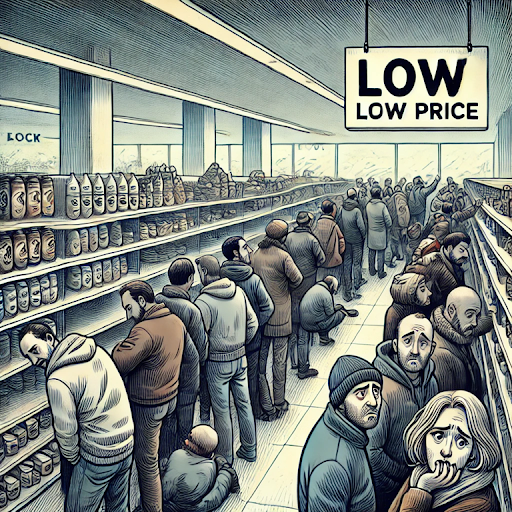
The Ramifications of Price Control: A Double-Edged Sword


Price control sounds great in theory. It’s the kind of idea that shows up looking like a superhero—cape flowing, dramatic music, promising to save your wallet from evil prices. And for about five minutes, everyone claps.

Then reality shows up wearing sweatpants and eating cereal out of the box.

I imagine price control like someone walking into a bakery and saying, “Alright everyone, cupcakes are now $1. No exceptions.” Customers cheer. Bakers blink. Somewhere in the back, a cupcake quietly packs its bags and leaves.

At first, it feels like winning. “Look at these cheap prices!” you say, proudly holding your $1 cupcake. But the next day, there are fewer cupcakes. By day three, the cupcakes are smaller. By day five, it’s just a guy behind the counter shrugging at an empty shelf like, “We have… crumbs?”

Because here’s the trick: when you tell prices they can’t go up, supply hears that and says, “Cool, I’ll go down then.” It’s like a seesaw where one side refuses to move, so the other just gives up entirely.

Meanwhile, big companies—oh, they don’t panic. They adjust. They’ve got spreadsheets, lawyers, backup plans, backup backup plans, and a guy named Greg whose entire job is to “navigate situations.” Greg loves price controls. Greg thrives in chaos. Greg has three monitors and zero fear.

Small businesses, though? They’re in the corner doing math like it’s a horror movie. “If I sell this for that… and my costs are this… then I… disappear?” Suddenly, the local shop that made everything personal is gone, and you’re left with giant corporations who can afford to play the long game.

It turns into a weird slapstick routine. Shelves get emptier. Lines get longer. People start hoarding like it’s an Olympic sport. You go in for milk and leave with a life lesson and maybe a single yogurt if you’re lucky.

And somehow, the big companies are still there. Not just surviving—thriving. They’ve streamlined, optimized, and probably renamed the yogurt “Dairy Experience™” while selling it in packs of six you didn’t ask for.

Price control was supposed to make everything fair. Instead, it’s like trying to fix a leaky pipe with duct tape… and then being surprised when the water finds a new way to spray directly into your face.

In the end, you’re standing there, holding your one discounted item, staring at a half-empty store, wondering how something designed to make life cheaper somehow made everything harder to get.

And Greg? Greg just got a promotion.

Shop With Chuckle

Thursday, August 22, 2024

The Art of Government Gaslighting: How Reality Is Up for Debate


Government gaslighting is like being in a group project where one person does all the talking, none of the listening, and then insists you’re the one who misunderstood the assignment.

It starts small. You notice something off—prices, policies, promises doing gymnastics. You say, “Hey… this feels weird.” And the response comes back smooth as butter: “We hear you. Nothing is weird. In fact, things have never been more not weird.” Suddenly you’re standing there questioning your own eyeballs like they just betrayed you.

It’s the classic move: reality happens, then someone steps up to explain that reality didn’t actually happen the way you experienced it. You’re told things are improving while your grocery receipt looks like it just ran a marathon. “What you’re seeing isn’t what you think you’re seeing,” they say, like your wallet is just being dramatic for attention.

The wild part is how coordinated it feels. Different voices, same message. It’s like they all went to the same seminar called Advanced Pretending 101: How to Smile While Rewriting Reality. You start hearing phrases repeated so often they sound like a chorus. Meanwhile, you’re just trying to remember when common sense became optional.

And the people? They react in stages. First comes confusion. Then frustration. Then that quiet moment where you laugh because if you don’t, you’ll end up arguing with your toaster for validation. Conversations start sounding like:
“Is it just me?”
“No, I thought the same thing.”
“Okay good, I was about to apologize to my own thoughts.”

Trust starts slipping—not dramatically, but like socks on a hardwood floor. Slow, steady, and suddenly you’re on the ground wondering how you got there. When the people you’re supposed to rely on keep telling you everything’s fine while things feel… not fine, it creates this weird disconnect where reality and messaging are basically not on speaking terms.

And here’s the twist: the more it happens, the less people argue about the issue itself and the more they argue about what’s real. Now everyone’s debating definitions, interpretations, tone—anything except the actual problem. It’s like a magic trick where the distraction becomes the main event.

In the end, it doesn’t just confuse people—it wears them out. Because nothing is more exhausting than being told you’re wrong about something you’re literally living through. You don’t feel represented; you feel like you’re in a never-ending episode of “Are We Sure About That?”

And somewhere in the background, the messaging keeps rolling, calm and confident, like a GPS that refuses to admit it’s rerouting you into a lake.

“Continue straight,” it says.

You look at the water.

It says, “This is fine.”

Saturday, August 17, 2024

The Invention of Zip Ties: A Simple Solution to a Complex Problem


The first zip tie was not invented. It escaped.

Somewhere in the late 1950s, inside a factory that smelled like burnt coffee and bad decisions, an engineer was staring at a pile of wires that looked like spaghetti after a bar fight. His boss walked in, stepped on a cable, tripped, and invented new curse words not yet recognized by science.

“Fix this,” the boss said, pointing at the chaos like it personally insulted his family.

So the engineer did what all great minds do under pressure—he stared at it until his soul left his body for a few minutes. Then, in a moment of accidental genius, he created a tiny plastic strip with teeth. A polite little snake that only bites once.

And thus, the zip tie was born… or more accurately, unleashed.

At first, it was innocent. It helped organize wires. It made things neat. It whispered, “I bring order.” People trusted it. That was their first mistake.

Because once you hear that click-click-click, it’s over. There’s no undo. No “oops.” No second chances. Zip ties don’t believe in forgiveness. You tighten it too much? Congratulations—you’ve just permanently married those objects.

Engineers loved it. Electricians worshipped it. Somewhere, duct tape felt threatened.

But then the zip tie started branching out.

Police said, “Hey, this is handy.”
DIY people said, “I can fix anything with 37 of these.”
Gardeners said, “Plants? Controlled.”
Someone looked at a broken car bumper and said, “You’re staying right there, buddy,” and zip tied it like it owed them money.

Suddenly, zip ties were everywhere. Holding fences together. Fixing lawn chairs. Acting as emergency belt replacements for people who made questionable buffet decisions.

And then came the dark side.

You ever try to undo a zip tie without scissors? That’s not a task. That’s a personality test. You’re either calm and resourceful… or you’re gnawing at plastic like a raccoon that made poor life choices.

Some people claim there’s a trick to releasing them. Those people are either lying or part of a secret society.

Meanwhile, zip ties are just sitting there like, “You did this. Not me.”

They don’t stretch. They don’t negotiate. They don’t care about your plans. You tighten it, and it commits harder than someone who just signed a 30-year mortgage after a motivational podcast.

And the worst part? You always use one more than you need.

You start with a simple project: “I’ll just organize these cables.”
Twenty minutes later, you’ve zip tied things that didn’t need tying. A chair leg. A random stick. Somehow, your own hoodie string.

You sit back, look at your work, and think, “This is permanent now.”

That’s the real legacy of the zip tie. Not organization. Not convenience.

Commitment.

Cold, unbreakable, plastic commitment.

Shop With Chuckle

Saturday, July 27, 2024

The Importance of the Pledge of Allegiance: Unity Over Division


.The first time you say the Pledge of Allegiance as a kid, you don’t really know what’s going on. You’re half awake, your shoes are on the wrong feet, and suddenly you’re standing with your hand over your heart reciting something that sounds like a spell to summon a bald eagle.

“I pledge allegiance… to the flag…”
At that age, you’re mostly pledging allegiance to recess and whatever snack is in your lunchbox.

But over time, it hits differently.

The Pledge is kind of like America’s morning stretch. It’s that brief moment where everyone pauses—kids, teachers, that one guy who forgot his coffee—and collectively says, “Yeah, we’re part of something bigger than just Monday problems.”

It’s not about perfection. If it were, nobody would make it past “indivisible” without stumbling like they just hit a linguistic pothole.

“Indivis… indivi… look, we’re together, alright?”

That word alone has caused more classroom panic than pop quizzes.

But that’s part of the charm. The Pledge isn’t a performance—it’s a reminder. A quick daily reset that says, “Hey, this whole country thing? It’s a team effort.”

And let’s be honest, Americans love teams. We’ll argue over pizza toppings like it’s a constitutional amendment, but the second something matters, we show up like it’s the fourth quarter.

The flag part? That’s the symbol. Not just a piece of fabric, but a visual reminder that somehow millions of people—with wildly different opinions about everything from barbecue sauce to what “cold weather” means—are all under the same banner.

And then there’s “liberty and justice for all.”
That line isn’t just a nice ending—it’s the goal. It’s the “we’re not there yet, but we’re working on it” part. It’s ambition packed into a sentence.

Also, let’s acknowledge the logistics: getting a room full of kids to stand still, be quiet, and say the same thing at the same time is arguably one of the greatest organizational feats in human history. Somewhere, event planners are taking notes.

As adults, the Pledge can feel like background noise—something you remember doing more than something you actively think about. But when you actually listen to it again, it’s surprisingly bold.

It’s not saying, “Everything is perfect.”
It’s saying, “We believe in what this place can be.”

And that’s where the humor meets the meaning. Because America is a little chaotic. It’s a place where you can get 47 types of cereal but still can’t find the TV remote. Where people will passionately debate the correct way to pronounce “caramel” like national unity depends on it.

Yet somehow, it works.

The Pledge is that small, steady thread running through all the noise. A reminder that beneath the chaos, there’s a shared idea holding things together.

Plus, let’s be real—putting your hand over your heart automatically makes you stand a little straighter. It’s like your posture suddenly says, “I have my life together,” even if five minutes ago you were looking for your keys while holding them.

So yeah, the Pledge matters.

Not because it’s perfect.
Not because everyone says it flawlessly.

But because, in a country that can’t agree on pineapple on pizza, it’s one of the few moments where we all pause, look in the same direction, and say, “We’re in this together.”

Even if we still mess up “indivisible.”

Shop With Chuckle

Wednesday, July 24, 2024

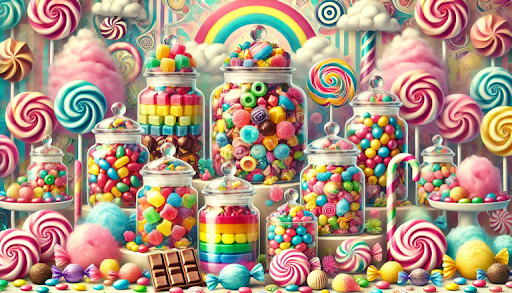
The Sweet Delight and Bitter Truth of Candy for Kids


Candy was clearly invented by a child who somehow got access to a lab and zero adult supervision.

Think about it. No reasonable adult wakes up and says, “You know what the world needs? Edible neon ropes that taste like happiness and chaos.” That’s a kid idea. Probably pitched mid-sugar rush: “What if… snacks… but louder?”

Candy doesn’t just exist—it performs.

You open a bag and suddenly you’re holding a rainbow that legally shouldn’t be that shiny. Gummies bounce. Chocolate melts like it’s emotionally overwhelmed. Hard candy sits there like, “Go ahead. Break a tooth. I dare you.”

And kids? Kids don’t eat candy. They experience it.

A child with a lollipop isn’t just having a treat—they’re conducting a full scientific study:

  • How long can this last?

  • What happens if I lick it sideways?

  • What if I stick it to the table for five minutes?

Meanwhile, parents are watching like wildlife observers. “Notice how the child becomes 87% louder after three bites…”

Chocolate is the smooth talker of the candy world. It shows up calm, collected, acting like it has a 401(k). Then five minutes later it’s melted into your hand like, “I never said I had stability.”

Gummies are chaos in small, friendly shapes. Bears, worms, fruit slices—none of these things should be chewy, yet here we are. You bite one and it fights back just enough to feel personal.

Sour candy? That’s just betrayal coated in sugar. Kids pop one in like heroes, then immediately make a face that looks like they just bit into a lemon that owes them money.

And don’t even get started on candy corn. That’s not candy—that’s a seasonal debate.

The real magic of candy isn’t just the taste. It’s the transformation.

A quiet kid becomes a stand-up comedian.
A tired kid becomes a track star.
A calm kid becomes… suspiciously quiet, which is somehow worse.

And then comes the aftermath.

Wrappers everywhere. Sticky fingerprints on surfaces that were once clean. A mysterious half-eaten gummy found three days later in a place no gummy should ever be.

Yet somehow, candy survives every generation.

Because it’s not just sugar—it’s a tiny, colorful moment of joy. A reward. A celebration. A “yes, you can have one more” that turns into “okay, maybe two more, but that’s it… okay three, but we’re done.”

Candy doesn’t pretend to be healthy. It doesn’t offer life advice. It just shows up, tastes amazing, and leaves everyone slightly more chaotic than before.

Honestly, that’s a pretty solid legacy.

Shop With Chuckle

The Life of Being a Bad Boy: The Untold Chronicles


Being a “bad boy” sounds cool until you realize it mostly involves standing in a corner pretending you meant to be there.

Nobody wakes up and says, “Today, I will mildly inconvenience society.” It just sort of happens. One minute you’re minding your business, the next you’re jaywalking like you’re in an action movie—except the only thing chasing you is a confused pigeon.

The bad boy lifestyle isn’t about chaos. It’s about small, unnecessary rebellion.

You don’t wait for the microwave to hit zero.
You take one pen from the bank and never return it.
You say “you too” when the waiter tells you to enjoy your meal and then commit to it like it was intentional.

That’s the energy.

There’s a myth that bad boys are fearless. Not true. They just pick very specific battles.

Will they ignore a “No Parking” sign for 30 seconds? Absolutely.
Will they open a PDF that says “Final_Final_Use_This_One”? Never. That’s where consequences live.

Fashion-wise, the bad boy look is just “I might fix a motorcycle later, or I might just stand near one.” It’s confidence mixed with the possibility of Googling “how to fix a motorcycle” at 2 a.m.

And let’s talk attitude.

A true bad boy doesn’t cause a scene. He slightly disrupts the vibe.

Someone says, “Let’s clap on three.”
He claps on two and a half.

Someone says, “We’re all bringing snacks.”
He shows up with one bag of chips and a story.

There’s also a surprising amount of overthinking.

You lean against a wall, trying to look mysterious, but now you’re wondering:

  • Is this wall clean?

  • Do I look casual or like I forgot how to stand?

  • Am I… becoming part of the wall?

That’s the internal struggle nobody talks about.

Bad boys also have a complicated relationship with rules. Not breaking them—just… negotiating.

Speed limit says 55? “What if we explored 58?”
“Push” door? “Let’s test the pull theory just in case.”

It’s less rebellion, more curiosity with attitude.

And the reputation? Completely exaggerated.

People imagine dramatic entrances, sunglasses indoors, walking away from explosions. In reality, you’re just trying to open a stubborn jar lid while maintaining dignity.

The real secret of being a bad boy is commitment.

Not to danger. Not to chaos.

To the bit.

You commit to the idea that you’re just a little unpredictable. A little off-script. The kind of person who might eat dessert before dinner and not explain yourself.

And honestly? That’s enough.

Because life doesn’t need a full villain arc. Sometimes it just needs someone willing to press the elevator button twice and stand by that decision.

No regrets.

Shop With Chuckle

Wednesday, July 10, 2024

The Classic Impact of Material Obsession on Society


I realized I had a problem the day I bought a second wallet… to hold the emotional weight of the first wallet’s bad decisions.

It didn’t feel like a problem at first. It felt like progress. I told myself I was “leveling up.” You know, becoming the kind of person who owns things that come in matte black and require a YouTube review before purchasing. Somewhere along the line, I stopped buying stuff and started auditioning for a lifestyle I absolutely did not have.

I remember standing in my kitchen, staring at a $300 blender like it was going to change my future. “This is it,” I thought. “This is the blender that turns me into a smoothie guy.” I have made exactly one smoothie. It tasted like regret and frozen spinach. The blender now lives on my counter as a monument to who I thought I could be.

My closet? That’s not a closet anymore. That’s a museum of alternate versions of me. There’s “gym me” (hasn’t shown up in months), “outdoorsy me” (owns boots that have never seen dirt), and “dress-up me” (waiting for an event that requires more than jeans and mild effort). Every hanger is basically a personality I purchased and then abandoned.

And don’t even get me started on online shopping. Late at night, it turns into a full-blown emotional support system. I’ll be sitting there like, “You know what would fix everything? A new pair of shoes.” Not therapy. Not sleep. Shoes. Because nothing says stability like tracking a package every two hours.

The best part is the justification. I become a lawyer in my own head. “This isn’t a want—it’s an investment.” In what? My ability to look slightly more put together while still forgetting why I walked into a room? Incredible return.

Then the packages arrive, and for a brief moment, I feel like I’ve won. I open the box like it’s a life achievement. But give it a week—two max—and that same item is just… there. Existing. Blending in with all the other “life-changing” purchases that quietly became background characters.

At some point, I looked around and realized my stuff had more structure than my life. My drawers were organized. My shelves were neat. Meanwhile, I’m eating cereal at 11 PM wondering how I ended up owning three jackets that all do the exact same thing.

And the weirdest part? The more I bought, the less anything meant. It’s like I diluted my own excitement. Nothing felt special because everything was trying to be.

Now I catch myself sometimes. Not always—I’m not about to pretend I’ve transcended the urge. But every now and then, I’ll hover over that “buy now” button and think, “Am I buying this… or am I trying to become someone again?”

Sometimes I still click it. I’m only human.

But at least now I know the truth: no package has ever arrived carrying a better version of me inside.

Just more stuff… and occasionally, a really nice box.

Burned Out, Underpaid, and Somehow Still Showing Up

You ever get to that point where your alarm goes off in the morning and your first thought isn't “Good morning!” It's: “Seriously? W...